
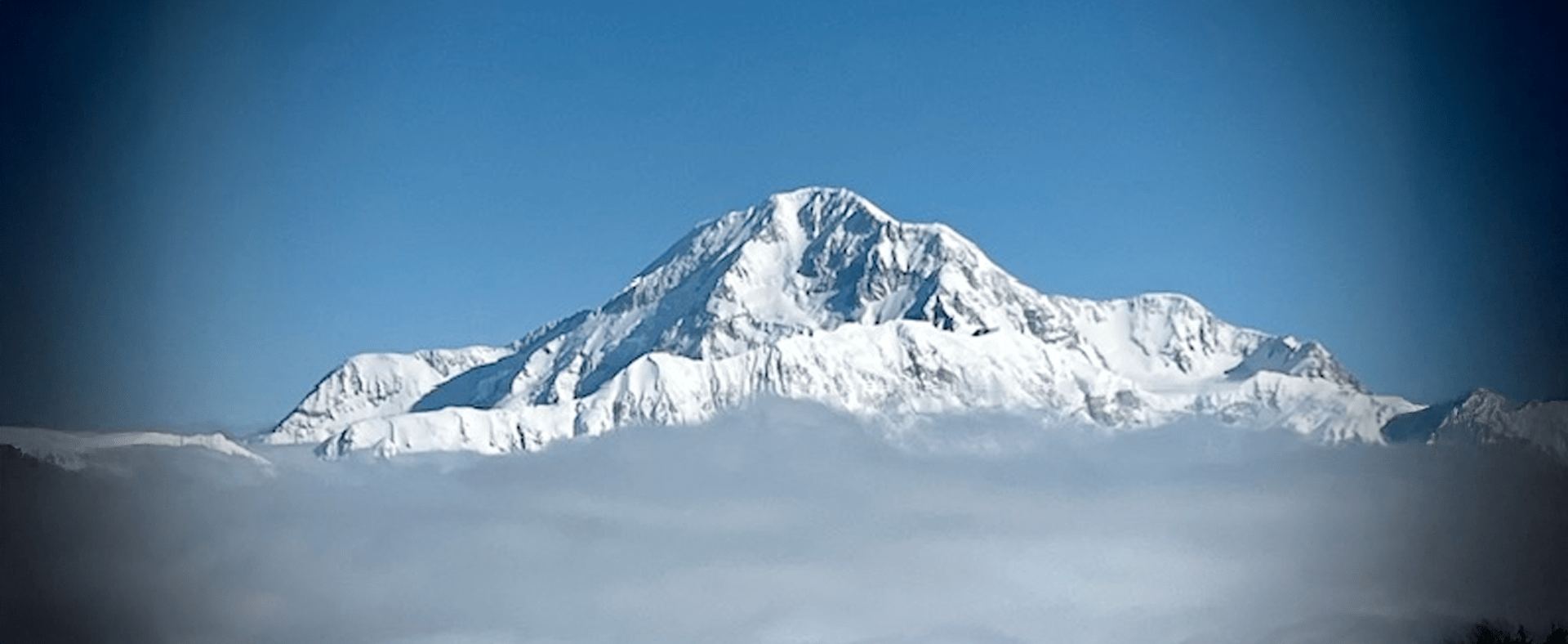
If you are considering climbing Mount Denali you should at least know some interesting facts about “The High One.” Mount Denali is more than just North America’s tallest peak. it’s a landscape of extremes, mystery, and awe. Rising 20,310 feet above sea level, Denali dominates the Alaskan skyline and draws climbers, scientists, and nature lovers from around the globe.
What exactly makes Denali so fascinating? Here are 10 compelling reasons why Mount Denali might just be the most interesting mountain on Earth.
1. Unparalleled Elevation and Prominence
Denali is the highest point in North America, but what truly sets it apart is its topographical prominence, which is the vertical distance from base to summit. Denali rises over 18,000 feet from its base, making it taller from base to peak than Everest itself. Its visual and geographical dominance is second to none.
2. Climbing Mount Denali Offers Challenging Conditions
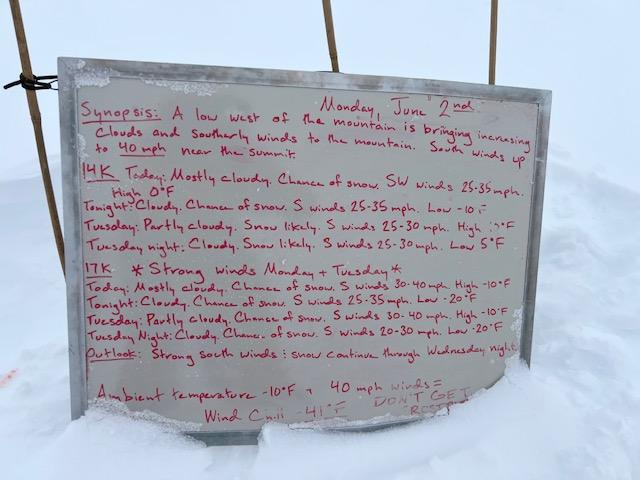
National Park Service daily weather board at 14k camp
This is not a climb for the faint of heart. Denali’s extreme latitude means lower oxygen levels, brutal wind chills, deep crevasses, and sudden whiteouts. It’s considered one of the toughest high-altitude climbs in the world, even for seasoned mountaineers.
Curious what the weather on Denali is right now? Click here to find out!
3. Name Controversy and National Recognition: Mount Denali or Mount McKinley?
For decades, the mountain was known officially as Mount McKinley. But in 2015, after long-standing efforts by Alaska Natives and state leaders, the mountain’s original name, Denali, was officially restored. This act symbolized a broader push for cultural respect and indigenous recognition in U.S. history.
4. Unclimbed Arctic Faces
Most climbers follow the popular West Buttress route, but Denali still guards untouched and rarely-attempted routes on its remote north and east faces. These vertical ice walls and avalanche-prone ridges offer extreme alpinists the allure of true exploration in the 21st century.
5. Geological Youth and Ongoing Uplift
Denali is still growing. The collision between the Pacific and North American plates pushes the Alaska Range upward by about 1 millimeter per year. This makes Denali not just a monument of the past, but an active feature of Earth’s dynamic geology.
6. Mount Denali’s Extensive Glacial Systems
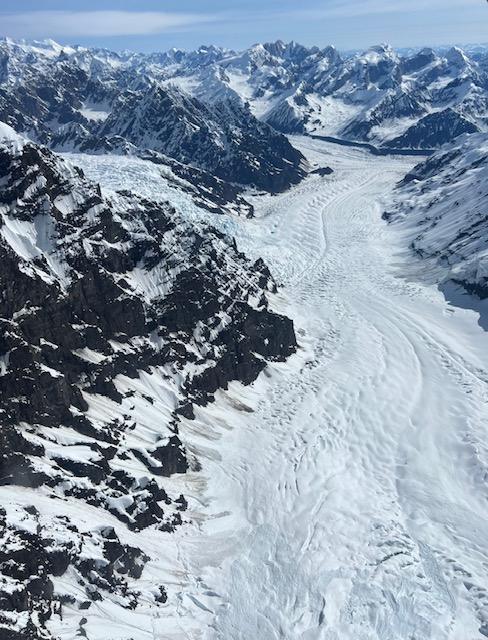
Views of massive glaciers while flying over Denali
Denali is surrounded by some of Alaska’s largest glaciers, including the 44-mile-long Kahiltna Glacier, the longest in the Alaska Range. These glaciers feed rivers, shape valleys, and provide a frozen roadmap of climate history going back thousands of years.
7. Dinosaurs Everywhere! Paleontological Significance
Believe it or not, Denali National Park holds dinosaur fossils, including tracks from theropods and duck-billed dinosaurs. These finds provide a glimpse into the region’s lush, prehistoric past, once teeming with ancient life far different from today’s icy wilderness.
8. Iconic Visibility: “I can see Russia from my house.”
On a clear day, Denali can be seen from more than 200 miles away, including Anchorage and Fairbanks. Its sheer bulk and solitary rise from the plains make it one of the most photogenic and recognizable mountains on Earth.
9. Extreme Climatic Conditions: Cold AF
Denali is home to some of the harshest weather on the planet. With recorded temperatures dipping below -75°F and wind chills plunging to -100°F, it remains snow-covered year-round and serves as a training ground for polar expeditions.
10. Cultural and Scientific Importance
Denali is sacred to many Alaska Native communities, and it also serves as a natural lab for studying climate change, glacial movement, high-altitude biology, and permafrost dynamics. It’s a site where culture and science intersect in profound ways.
If you are seriously considering Climbing Mount Denali, you’re going to need a place to thaw out after. Not only are we just down the road from your base camp, but we’ve climbed the beast ourselves and would love to swap stories around the fire pit. Come check out our available cabins or make a reservation at our restored railcar.